
Once the leaves drop, every tree in your yard looks a little lifeless. That makes November and December the hardest time of year to tell a sleeping tree from a dead one, and the most important time to figure it out. A dead tree that makes it through the fall can come down the first time heavy snow or ice hits Pittsburgh.
Here's how to tell if a tree is dead or just dormant, the warning signs to look for, and what to do if you find one on your property.
Why a Dead Tree Is a Bigger Problem in Winter
Healthy trees bend. Their wood still holds moisture, so branches flex under wind and weight and spring back. A dead tree dries out and turns brittle, so it snaps instead of bending.
Western Pennsylvania winters put that to the test. Wet, heavy snow and freezing rain coat every branch and add a lot of weight overnight. Freeze-and-thaw cycles also loosen the soil around the roots. Put those together with brittle wood, and a dead tree or a dead limb can fall onto your roof, car, driveway, or a neighbor's fence with no warning.
The good news is that winter is also when a dead tree is easiest to spot, as long as you know what to look for.
Dormant or Dead? Start With the Scratch Test
The quickest way to check is the scratch test:
- Pick a small twig or branch on the tree.
- Scrape a tiny patch of the outer bark with your thumbnail or a pocketknife.
- Look at the layer right underneath.
If it's green and a little moist, that part of the tree is alive and just dormant for the winter. If it's brown, dry, and brittle, that branch is dead. Try a few spots on different sides of the tree. A few dead twigs are normal. Dead wood all over the tree is not.
7 Signs a Tree Is Dead or Dying
- The scratch test comes up brown everywhere. Dead tissue on branches all around the tree means the tree is likely dead, not just one limb.
- Branches snap instead of bend. Gently bend a small twig. Live wood flexes. Dead wood breaks with a dry crack.
- Bark is peeling or falling off. When large patches of bark loosen or fall away and the wood underneath is bare, the tree has usually stopped growing.
- There are mushrooms or fungus on the trunk or roots. Fungus growing on the trunk or around the base is often a sign of rot inside, even if the tree still looks solid.
- There are deep cracks or hollow spots. Splits that run deep into the trunk, or cavities you can see into, weaken the whole tree.
- The tree has started to lean. A new lean, or soil that's cracked or lifting on one side of the base, can mean the roots are failing.
- There are no buds on the twigs. Even in winter, healthy trees have small buds set for spring. Bare, shriveled twig tips with no buds are a bad sign.
One or two of these signs doesn't always mean the whole tree has to go. Three or more, or any of them on a tree near your house, is worth having looked at.
A Special Warning About Ash Trees in Western PA
If you have ash trees, check them first. The emerald ash borer, an invasive beetle, was first found in Pennsylvania in 2007 in Cranberry Township and Marshall Township, just north of Pittsburgh. It has since killed ash trees all over the region.
The beetle eats the layer just under the bark, so an infested tree can die within a few years. Look for small D-shaped holes in the bark, thinning branches at the top of the tree, and bark splitting or falling away. Dead ash trees get brittle fast and are known for dropping large limbs, so they shouldn't be left standing near homes, driveways, or play areas.
What to Do If You Think a Tree Is Dead
- Don't wait for spring. The riskiest months for a dead tree are the ones right in front of us.
- Keep people and cars clear. Don't park under it, and keep kids away from it until it's checked.
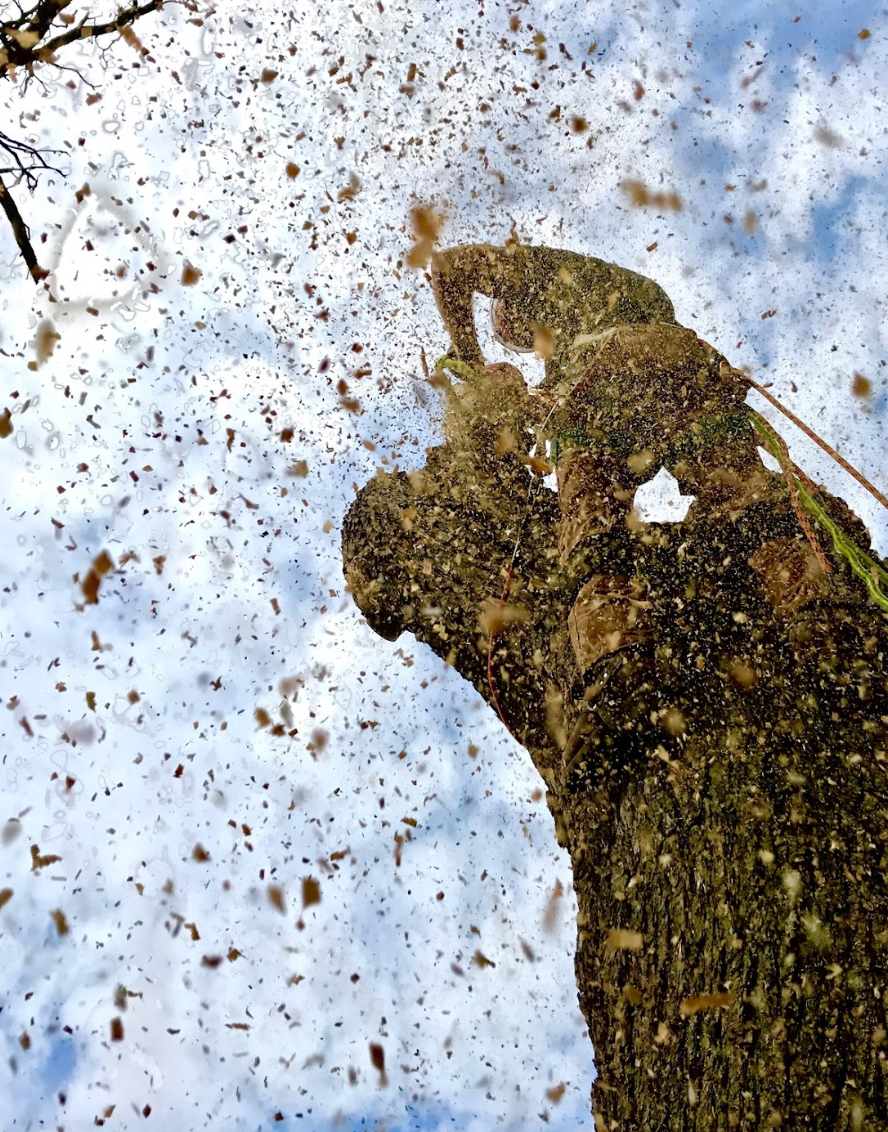
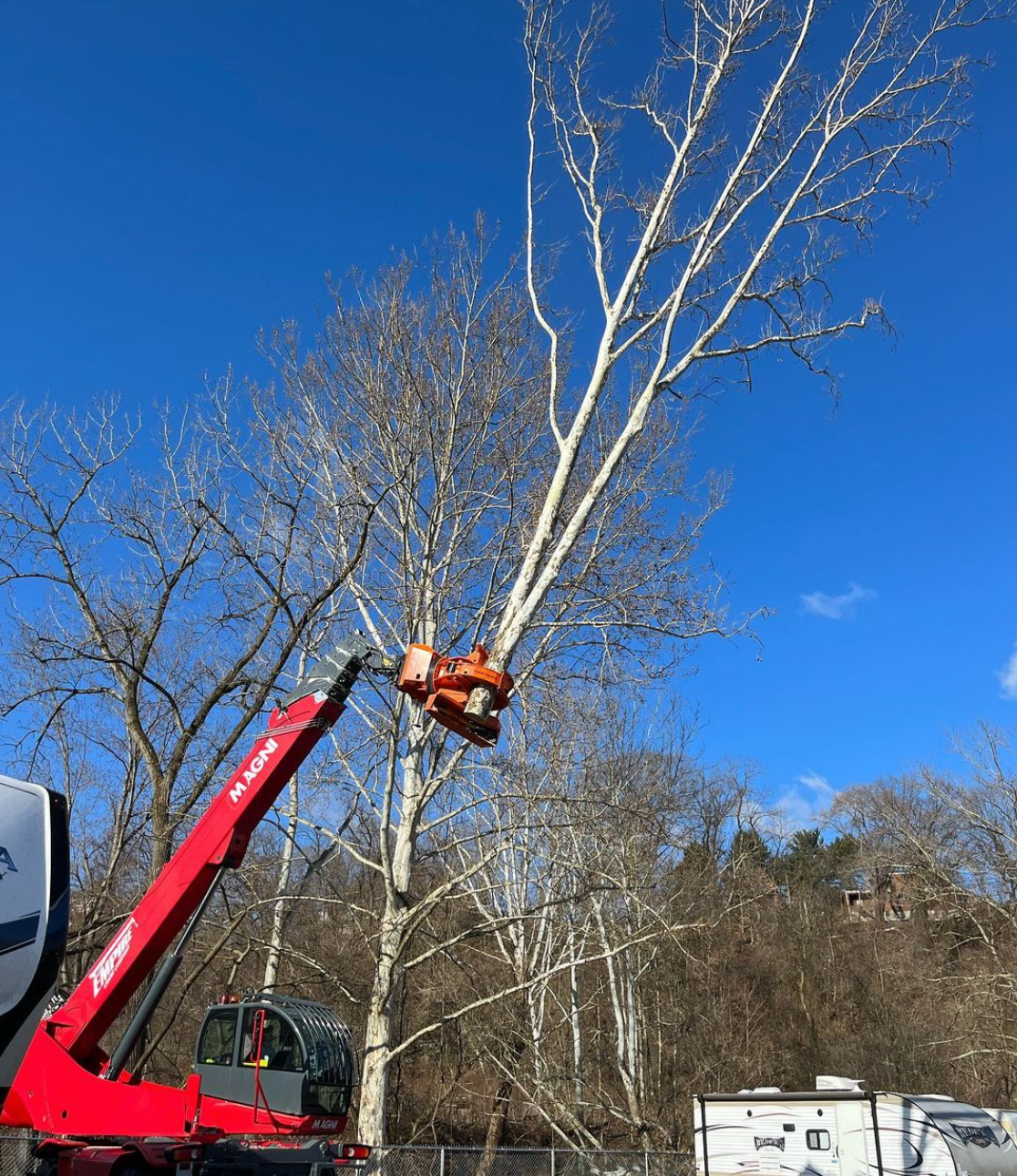
- Don't take it down yourself. Dead trees are unpredictable. Brittle wood can break in places you don't expect, which is why professional crews use rigging, lifts, and cranes to bring them down in sections.
- Stay away from power lines. If a dead tree or limb is touching or hanging over a power line, call your utility company first.
- Get a free estimate. A quick look from a tree crew will tell you whether the tree has to come down, or whether removing a few dead limbs will do the job.
Winter can also be a good time for the work itself. With the leaves gone, the crew can see every branch clearly, and frozen ground means less wear on your lawn from equipment.
Not Sure About a Tree? Primetime Can Take a Look
Primetime Tree & Landscape gives free estimates across Allegheny and Beaver County. We'll come out, look at the tree, and tell you honestly whether it needs to come down. If it does, our crew has the cranes, spider lifts, and grapple saws to remove it safely, even in tight spots, and we clean up before we leave.
If a tree has already come down or is about to, we offer 24/7 emergency tree removal.
Request your free estimate or call 412-699-6768.
Frequently Asked Questions
Can a tree look dead in winter but still be alive?
Yes. Most trees in Pittsburgh drop their leaves and go dormant from late fall to spring. Use the scratch test: green under the bark means it's alive.
Is a dead tree dangerous?
It can be. Dead wood is brittle and can drop limbs or fall without warning, especially under snow, ice, or high wind. The closer it is to your home or driveway, the sooner it should be checked.
Should I remove a dead tree in winter or wait until spring?
If it's near your house, cars, or anywhere people walk, don't wait. Winter weather is when dead trees are most likely to fail, and removal can be done safely in the colder months.
How much does it cost to remove a dead tree?
It depends on the tree's size, where it sits, and how much access the crew has. Primetime gives free estimates so you know the price before any work starts.